Have you ever opened a message and noticed someone simply typed “WTW”? 🤔 Maybe you saw it on Snapchat, Instagram, TikTok, or in a regular text conversation and wondered what it meant. You’re not alone. Modern texting is full of abbreviations, and new slang appears almost every day.
Understanding the WTW meaning in text can help you avoid confusion and respond naturally during conversations. Whether you’re chatting with friends, talking to classmates, or messaging someone new, knowing what WTW means makes communication easier and more enjoyable.
The good news is that WTW is simple once you know the context. Although it has a few different meanings, one interpretation is far more common than the others. Throughout this guide, you’ll learn what WTW stands for, when people use it, how to reply, where it became popular, and plenty of real-life examples that make everything easy to understand.
What Does WTW Mean in Text? 💬
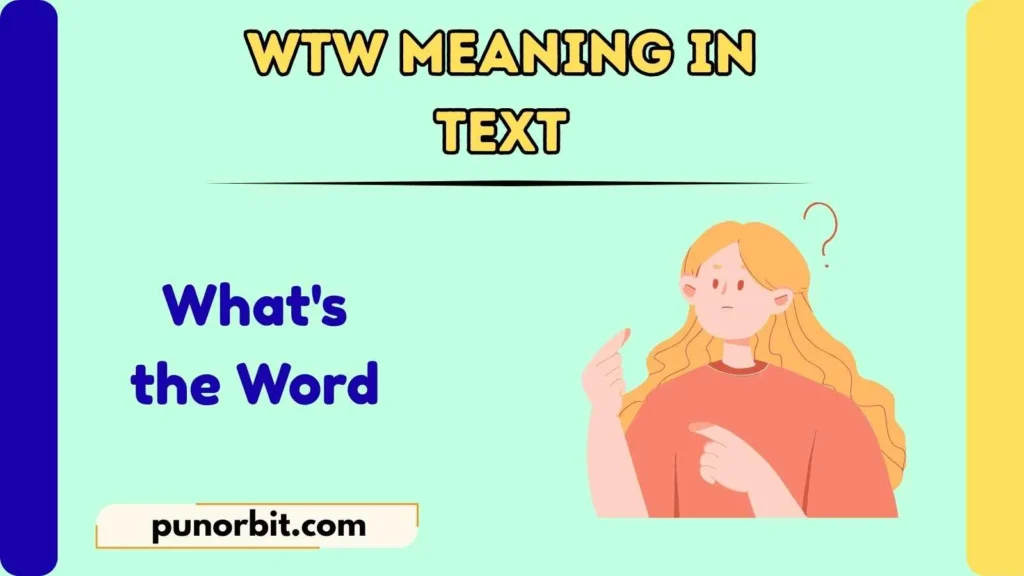
The WTW meaning in text is most commonly:
WTW = “What’s the Word?”
In everyday conversations, “What’s the Word?” is another way of asking:
- What’s going on?
- What’s happening?
- What’s the plan?
- What’s up?
- Any news?
- What are you doing?
Instead of typing a complete sentence, people simply send WTW because it’s quick, casual, and easy to understand.
Featured Snippet Answer
| Question | Answer |
|---|---|
| What does WTW mean in text? | WTW usually means “What’s the Word?” It’s a casual way of asking what’s happening, what’s the plan, or what someone is doing. |
In most conversations, WTW is used to start chatting or check whether someone is available to hang out.
Example 1
Alex: WTW tonight?
Ryan: Nothing much. Want to grab dinner?
Example 2
Emma: WTW?
Sophia: Just studying. How about you?
Example 3
Jake: WTW after class?
Chris: Let’s head to the gym.
In each example, WTW starts the conversation naturally without typing a longer question.
What Does “What’s the Word?” Actually Mean? 🤔
Many people assume WTW literally asks for a specific word. However, that’s rarely the case in texting.
Instead, “What’s the Word?” is an informal greeting that means:
- What’s new?
- What’s happening today?
- What’s everyone doing?
- Do you have any plans?
- Anything interesting going on?
Think of it as a relaxed conversation starter.
Instead of saying:
“Hey, what are you doing today?”
Someone may simply type:
WTW
Both messages have nearly the same purpose.
It Can Mean Different Things Depending on Context
Although the primary meaning remains the same, the intention behind WTW changes slightly based on the conversation.
For example:
Checking in
Friend:
WTW?
Meaning:
How have you been?
Making Plans
Friend:
WTW this weekend?
Meaning:
Do you have plans?
Looking for Something Fun
Friend:
WTW tonight?
Meaning:
Is anything happening?
Starting a Conversation
Someone:
WTW
Meaning:
Hey, what’s up?
Because of this flexibility, WTW has become one of the most useful texting abbreviations used by teenagers and adults alike.
How Is WTW Used in Text Conversations? 📱
One reason WTW became so popular is its versatility. It works in many different situations without sounding awkward.
Here are the most common ways people use it.
1. Asking What’s Happening
This is the most common use.
Example:
David: WTW today?
Mark: I’m just relaxing at home.
2. Making Weekend Plans
Many friends use WTW before making plans.
Example:
Emily:
WTW Saturday?
Ashley:
Let’s go shopping.
3. Checking Availability
Instead of asking:
“Are you free?”
Someone simply says:
WTW?
Example:
Chris:
WTW later?
Jordan:
I’m free after six.
4. Starting a Casual Chat
Sometimes there isn’t any hidden meaning at all.
Example:
Mike:
WTW
Ben:
Nothing much. Just watching Netflix.
5. Looking for Something to Do
Example:
Lucas:
WTW tonight?
Aaron:
Everyone’s meeting at the park.
Common Situations Where You’ll See WTW
✅ Text messages
✅ Snapchat chats
✅ Instagram DMs
✅ TikTok messages
✅ Messenger
✅ Discord
✅ Group chats
✅ College chats
✅ Friend circles
It fits naturally into almost any informal conversation.
Other Meanings of WTW in Text 📝
Although “What’s the Word?” is by far the most common interpretation, WTW can occasionally have other meanings depending on the situation.
Understanding these helps you avoid misunderstanding a conversation.
WTW = What’s the Wave 🌊
Among some friend groups, WTW means:
What’s the Wave?
Here, wave refers to the current plan or activity.
Example:
WTW tonight?
Meaning:
What’s everyone doing tonight?
WTW = What’s the Move 🚗
Another popular interpretation is:
What’s the Move?
This usually means:
- What’s the plan?
- Where are we going?
- What should we do next?
Example:
WTW after work?
Meaning:
What’s the plan after work?
WTW = What’s the Deal?
Occasionally, someone uses WTW to ask:
What’s happening?
or
What’s going on?
Example:
WTW with everyone today?
Meaning:
Why is everyone acting differently?
Less Common Meanings
Depending on a specific community, WTW might occasionally represent something completely different.
However, in everyday texting, social media, and online messaging, these meanings are much less common than “What’s the Word?”
Whenever you’re unsure, simply read the surrounding conversation. The context almost always reveals the intended meaning.
Where Did WTW Come From? 🌍
Like many internet abbreviations, WTW didn’t become popular overnight.
Its roots come from spoken slang, where people casually asked:
- “What’s the word?”
- “What’s the move?”
- “What’s the wave?”
These phrases were commonly used among friends long before smartphones became part of everyday life.
As texting became faster, users started shortening longer phrases into simple abbreviations.
For example:
| Full Phrase | Short Form |
|---|---|
| What’s up? | WSP |
| Be Right Back | BRB |
| Laugh Out Loud | LOL |
| Talk To You Later | TTYL |
| What’s the Word? | WTW |
Eventually, WTW spread across texting apps and social media because it saved time while keeping conversations casual.
Today, millions of users recognize it instantly, especially younger audiences who frequently communicate through short messages.
As internet slang continues to evolve, WTW remains one of the easiest and most practical abbreviations to use in everyday digital conversations.
When Should You Use WTW in Text? ⏰
Knowing the WTW meaning in text is only part of the story. It’s just as important to understand when using it feels natural. While WTW works well in casual conversations, it isn’t suitable for every situation.
Think of WTW as a friendly conversation starter. It helps you check in with someone, make plans, or simply see what they’re doing.
Great Times to Use WTW
You can confidently use WTW when:
- 😊 Catching up with friends
- 📅 Making weekend plans
- 🎉 Looking for something fun to do
- 📱 Starting a casual conversation
- 👥 Messaging classmates
- 🎮 Inviting someone to play games
- 🏀 Asking about activities after school or work
- 🚗 Planning to meet up
Example
You: WTW after work?
Friend: I’m free around 6 PM. Want to grab coffee?
Another Example
You: WTW this weekend?
Friend: Thinking about going to the beach.
When You Should Avoid WTW
Although it’s popular, WTW isn’t appropriate everywhere.
Avoid using it in:
- 💼 Professional emails
- 🏢 Business meetings
- 📄 Job applications
- 🎓 Academic assignments
- 👨⚖️ Formal conversations
- 📢 Official announcements
Instead of writing:
WTW tomorrow?
A professional message would be:
Are you available tomorrow for a meeting?
Choosing the right tone shows good communication skills.
WTW Meaning on Snapchat, Instagram, TikTok, and Other Social Media 📲
One reason WTW has become so popular is that it appears across almost every social media platform. While the abbreviation stays the same, the conversation around it may change slightly depending on where it’s used.
Snapchat 👻
On Snapchat, WTW often means:
- What are you doing?
- Want to hang out?
- What’s happening today?
Example:
Snap Message:
WTW later?
Meaning:
Are you free later today?
Instagram 📸
Instagram users commonly send WTW through direct messages to start a conversation.
Example:
WTW?
Meaning:
Hey! What’s up?
Sometimes it’s also used after reacting to someone’s story.
Example:
WTW tonight?
Meaning:
Do you have plans tonight?
TikTok 🎵
TikTok comments and messages often use WTW to ask about upcoming plans or continue a conversation.
Example:
WTW after the concert?
Meaning:
What’s everyone doing afterward?
Discord 🎮
Gamers frequently use WTW while chatting with teammates.
Example:
WTW?
Meaning:
Who’s getting online?
Messenger and WhatsApp 💬
In messaging apps, WTW usually starts a friendly conversation.
Example:
WTW today?
Meaning:
What’s going on today?
No matter which platform you’re using, the abbreviation almost always carries a relaxed, friendly tone.
Real-Life Examples of WTW in Text Conversations 💬
The easiest way to understand the WTW meaning in text is by seeing how people naturally use it.
Example 1: Making Plans
Noah: WTW tonight?
Liam: A few of us are watching a movie.
Example 2: Weekend Chat
Emma: WTW this weekend?
Olivia: I’m visiting my cousins.
Example 3: Starting a Conversation
Mia: WTW?
Ella: Just got home from work.
Example 4: Looking for Fun
Jack: WTW after school?
Ryan: Let’s grab pizza.
Example 5: Group Chat
Alex: WTW everyone?
Chris: Basketball at 7!
Example 6: Gaming
Daniel: WTW tonight?
Jake: Let’s play after dinner.
Example 7: Vacation
Sarah: WTW tomorrow?
Emily: I’m planning to explore downtown.
Example 8: College Friends
Lucas: WTW after class?
Ben: Library first, then coffee.
Example 9: Family Conversation
Brother: WTW today?
Sister: Helping Mom with groceries.
Example 10: Holiday Plans
Friend: WTW this Friday?
You: Thinking about going to the night market.
These examples show that WTW isn’t tied to one specific situation. It simply helps begin a relaxed conversation.
How to Reply to WTW 💡
Receiving a WTW message is common, especially from friends. The best response depends on what you’re doing and where the conversation is heading.
If You’re Free
Reply naturally.
Examples:
- Nothing much.
- Just relaxing.
- I’m free today.
- Want to hang out?
- What’s your plan?
If You’re Busy
You can still keep the conversation friendly.
Examples:
- Working right now.
- Busy with homework.
- At the gym.
- I’ll text you later.
- Maybe tonight.
If You Want More Details
Sometimes the sender is being vague.
Try replies like:
- What’s up?
- What did you have in mind?
- What’s the plan?
- Where are you going?
- Who’s coming?
Fun Replies
If you’re close friends, playful responses work well.
Examples:
- Depends… what’s happening? 😄
- You tell me! 😂
- Looking for adventure? 😎
- I’m down. What’s the move?
- Wherever the snacks are! 🍕
Keeping your reply casual usually matches the tone of WTW.
Common Mistakes People Make About WTW ❌
Many people misunderstand WTW because internet slang often changes over time.
Here are some of the most common mistakes.
Mistake 1: Thinking It Has Only One Meaning
Although “What’s the Word?” is the primary meaning, it can also mean:
- What’s the Move
- What’s the Wave
Always read the conversation first.
Mistake 2: Using It in Formal Situations
WTW belongs in casual conversations—not professional communication.
Mistake 3: Assuming Everyone Knows It
Not everyone is familiar with texting abbreviations.
If you’re chatting with someone who rarely uses slang, writing the full question may be clearer.
Mistake 4: Overusing Abbreviations
Messages filled with abbreviations can become confusing.
Example:
WTW IDC IMO BRB LOL
Too many abbreviations make conversations harder to follow.
Mistake 5: Ignoring Context
Suppose someone says:
WTW after graduation?
They’re clearly asking about plans—not asking for the meaning of a word.
Context always helps determine the correct interpretation.
WTW vs Similar Texting Abbreviations 🔄
Many texting abbreviations have similar meanings, making it easy to confuse them. The table below highlights the differences.
| Abbreviation | Meaning | When It’s Used |
|---|---|---|
| WTW | What’s the Word? | Asking what’s happening or making plans |
| WSP | What’s Up? | Greeting someone casually |
| WYD | What You Doing? | Asking what someone is currently doing |
| HMU | Hit Me Up | Asking someone to contact you |
| SUP | What’s Up? | Informal greeting |
| YO | Hello | Friendly greeting |
| BRB | Be Right Back | Leaving a conversation briefly |
| TTYL | Talk To You Later | Ending a conversation politely |
Quick Comparison
WTW
“What’s happening today?”
WYD
“What are you doing right now?”
WSP
“Hello, how are things?”
Although these abbreviations are related, each serves a slightly different purpose. Understanding those small differences helps you communicate more naturally and avoid confusion in everyday text conversations.\
Is WTW Popular Among Different Age Groups? 👥
The WTW meaning in text is widely recognized, but its popularity varies by age group. Since texting habits change from one generation to another, you’ll notice that some people use WTW daily, while others may never have seen it before.
Teenagers (13–19) 📱
Teenagers are among the most frequent users of WTW. It often appears in:
- School group chats
- Snapchat conversations
- Instagram DMs
- Gaming chats
- Weekend planning messages
Typical example:
Friend: WTW after school?
Reply: Let’s grab some food.
For teens, WTW is simply a fast and casual way to start a conversation.
Young Adults (20–35) 🎉
College students and young professionals also use WTW regularly.
Common situations include:
- Planning coffee meetups
- Organizing weekend trips
- Inviting friends to events
- Starting casual conversations
Example:
WTW tonight?
Meaning:
“Are we doing anything tonight?”
Adults (35+) 💬
Older adults are generally less likely to use internet abbreviations like WTW. Many prefer writing complete sentences.
Instead of:
WTW?
They may write:
What are your plans today?
However, adults who frequently use social media or messaging apps may still understand the abbreviation.
Is WTW Still Popular?
Yes! WTW continues to be a common piece of internet slang because it’s:
- ✅ Short
- ✅ Easy to remember
- ✅ Quick to type
- ✅ Friendly
- ✅ Flexible in many conversations
As long as casual texting remains popular, WTW is likely to stay part of everyday digital communication.
Tips for Using WTW Naturally 💡
Learning the WTW meaning in text is helpful, but using it naturally makes your conversations feel more authentic.
Here are some practical tips.
✔ Use It With Friends
WTW works best in relaxed conversations.
Example:
WTW this evening?
✔ Keep the Conversation Going
After someone replies, ask follow-up questions.
Example:
WTW?
Nothing much.
Want to hang out later?
This keeps the conversation flowing instead of ending after one message.
✔ Match the Other Person’s Style
If someone writes casually, replying with WTW feels natural.
If they write formally, use complete sentences instead.
✔ Don’t Force It
Not every conversation needs abbreviations.
Sometimes writing:
“What are you doing today?”
is clearer than using WTW.
✔ Add Personality
Friendly emojis can make your message feel warmer.
Examples:
WTW? 😄
WTW tonight? 🎉
WTW this weekend? 😎
A small emoji often makes casual conversations feel more engaging.
Why People Prefer Using WTW Instead of Full Sentences 🚀
One reason the WTW meaning in text has become so popular is convenience. Modern conversations are often fast-paced, and abbreviations help people communicate quickly without losing meaning.
Here are a few reasons people prefer WTW:
Saves Time ⏱️
Typing WTW takes only a few seconds compared to writing a full question like:
“What are you doing today?”
Feels Casual 😊
WTW creates a relaxed and friendly tone. It doesn’t sound overly formal or serious, making it perfect for everyday chats.
Starts Conversations Easily 💬
Sometimes people simply want to break the ice.
Instead of overthinking what to say, they can send:
WTW?
It’s simple and inviting.
Works in Many Situations 🌍
WTW can be used to:
- Check on friends
- Ask about plans
- Start a conversation
- Invite someone out
- Find out what’s happening
Its flexibility is one of the reasons it remains so popular.
FAQs
What does WTW mean in text?
The most common WTW meaning in text is “What’s the Word?” It is a casual way of asking what’s happening, what’s new, or what someone’s plans are.
Does WTW always mean “What’s the Word”?
No. While “What’s the Word?” is the most common meaning, WTW can also mean “What’s the Move?” or “What’s the Wave?” depending on the conversation and the people using it.
Is WTW considered slang?
Yes. WTW is a modern internet slang abbreviation commonly used in text messages, social media, and online chats. It is best suited for informal conversations.
Can I use WTW in professional communication?
No. WTW is intended for casual communication with friends, classmates, or family members. In professional settings, it’s better to use complete and formal sentences.
How should I respond to WTW?
Your reply depends on the situation. You can answer with what you’re doing, share your plans, or ask a follow-up question.
For example:
- “Just relaxing.”
- “I’m free later.”
- “Nothing much. You?”
- “Want to meet up?”
- “What’s your plan?”
Final Thoughts 🎯
Understanding the WTW meaning in text makes it much easier to keep up with today’s fast-moving digital conversations. In most cases, WTW stands for “What’s the Word?”, serving as a casual way to ask what’s happening, what someone is doing, or whether there are any plans.
Like many texting abbreviations, its exact meaning depends on the context. Sometimes it can also mean “What’s the Move?” or “What’s the Wave?”, but the overall purpose remains the same—to start a friendly conversation or check in with someone.
Whether you’re chatting on Snapchat, Instagram, TikTok, WhatsApp, Discord, or through regular text messages, knowing when and how to use WTW helps your conversations feel more natural and confident. By paying attention to the situation and the people you’re talking to, you’ll quickly recognize the intended meaning and know exactly how to respond.

Peter Hemsworth is the mind behind PunOrbit.com, where internet slang, viral phrases, and everyday words reveal their hidden meanings. He transforms simple expressions into captivating stories that expose what people truly mean beneath the surface. Step into PunOrbit.com and discover a universe where every word hides a deeper secret waiting to be uncovered.