YWA meaning in text is becoming a popular search as more people come across this abbreviation in chats and social media conversations. YWA meaning in text usually depends on the context, making it important to understand its correct usage. In this guide, you’ll discover what it means, when it’s used, and how to reply with confidence.
Whether you received this abbreviation in a message or simply want to stay updated with modern texting slang, this article has you covered. We’ll explain YWA meaning in text with simple examples, common situations, and related meanings so you can understand YWA meaning in text quickly and use it correctly.
What Does YWA Mean in Text?
The most common YWA meaning in text is:
You’re Welcome Anyway
It is typically used when someone forgets to say “thank you” after receiving help or information. Instead of waiting for appreciation, the sender jokingly or politely replies with “YWA.”
Depending on the tone, YWA can sound:
- 😊 Friendly
- 😄 Playful
- 🙃 Slightly sarcastic
- 💬 Casual
Understanding the context helps you know which tone the sender intended.
The Most Common Meaning of YWA in Texting
In everyday texting, YWA almost always means “You’re Welcome Anyway.”
People use it after doing someone a favor or answering a question when the other person doesn’t acknowledge the help.
Example 1
Alex: “What’s the Wi-Fi password?”
Jordan: “It’s Green123.”
(No reply)
Jordan: “YWA 😂”
Meaning: You’re Welcome Anyway.
Example 2
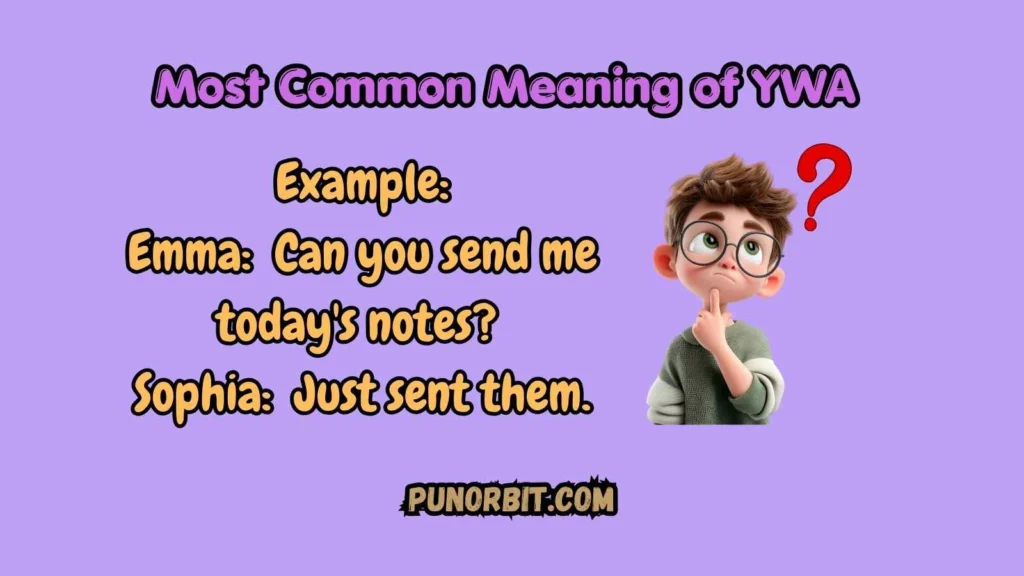
Emma: “Can you send me today’s notes?”
Sophia: “Just sent them.”
(Seen 10 minutes ago)
Sophia: “YWA 😅”
Again, it means the sender is jokingly saying, “You’re welcome.”
Why Do People Use YWA?
Modern texting is fast, informal, and often filled with abbreviations.
Instead of typing:
“You’re welcome anyway.”
People simply write:
YWA
Benefits of Using YWA
✅ Saves time
✅ Sounds casual
✅ Fits modern texting culture
✅ Adds humor to conversations
✅ Makes chats feel more natural
Because of these advantages, YWA has become increasingly common in text conversations.
YWA Meaning on Social Media
Social media platforms encourage short, engaging messages, making abbreviations like YWA more popular. 🌐
You may come across YWA on:
- TikTok
- X
- Snapchat
Although the meaning usually stays the same, the tone often changes depending on the post.
Friendly Use
“I found the answer for you… YWA 😊”
Funny Use
“When I solve everyone’s problems and nobody says thanks… YWA 😂”
Sarcastic Use
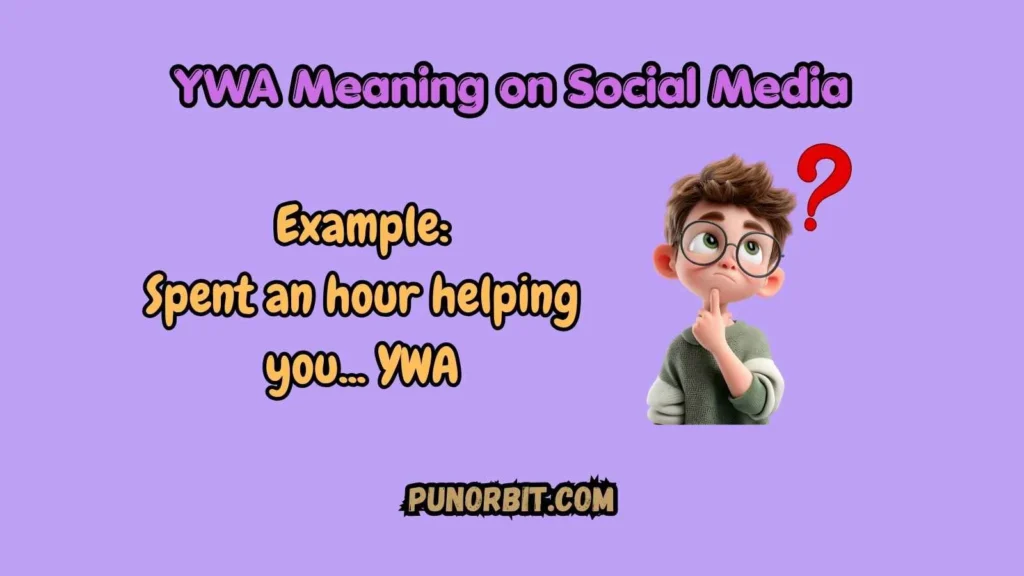
“Spent an hour helping you… YWA 🙃”
The emoji often helps readers understand whether the message is serious or playful.
Is YWA Positive or Sarcastic?
This is one of the most common questions about YWA meaning in text.
The answer is:
It can be both.
Positive
Used between close friends after doing someone a favor.
Example:
“I booked the tickets for everyone. YWA! 😄”
Sarcastic
Used when someone forgets to thank the sender.
Example:
“I literally answered all your questions… YWA.”
Although it sounds sarcastic, it’s often meant as light-hearted teasing rather than genuine annoyance.
Where Is YWA Commonly Used?
You’ll most often see YWA in casual online communication.
Text Messages 📱
Friends and family frequently use it in personal conversations.
Group Chats 💬
Someone helps the group and jokingly says YWA after being ignored.
Social Media 🌎
Users post funny memes and relatable content using YWA.
Gaming Chats 🎮
Players may say YWA after helping teammates complete a mission or solve a problem.
Messaging Apps
YWA also appears on:
- Messenger
- Discord
- Telegram
- Signal
The meaning remains largely the same across these platforms.
Real-Life Examples of YWA Meaning in Text
Learning through examples makes understanding much easier.
Example 1
Friend: “Where’s the restaurant?”
You: “Next to the cinema.”
(No reply)
You: “YWA 😂”
Meaning: You’re Welcome Anyway.
Example 2
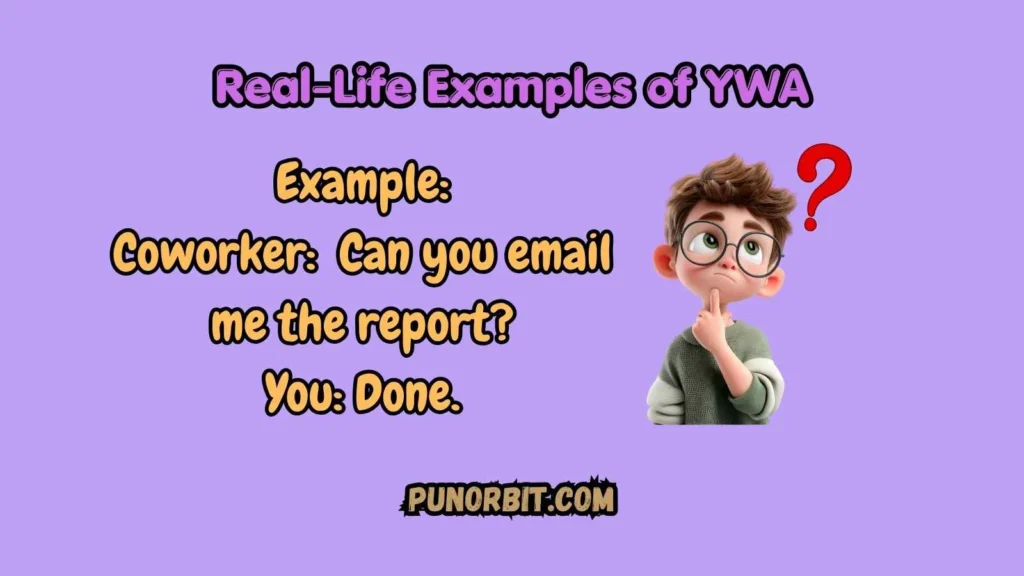
Coworker: “Can you email me the report?”
You: “Done.”
(Seen)
You: “YWA.”
Meaning: A playful reminder that a thank you would have been appreciated.
Example 3
Sibling: “Can you feed the dog?”
You: “Already did.”
(No response)
You: “YWA 😆”
Again, it means You’re Welcome Anyway.
Common Situations Where YWA Is Used
People naturally use YWA in many everyday conversations.
After Giving Directions
“Take the second exit… YWA.”
After Sharing Information
“The store closes at 9 PM. YWA.”
After Solving a Problem
“I fixed your laptop settings. YWA.”
After Sending a File
“Here’s the document you needed. YWA.”
Each example shows someone helping another person without receiving immediate appreciation.
Why Context Matters
Like many internet abbreviations, YWA meaning in text depends heavily on context.
Ask yourself:
- Did someone just help another person?
- Did the recipient forget to say thank you?
- Is the tone playful?
- Are laughing emojis included?
- Is it a conversation between friends?
If the answer is yes, YWA almost certainly means “You’re Welcome Anyway.”
Origin and History of YWA
Like many internet abbreviations, YWA meaning in text emerged as online communication became faster and more informal. 🌐
As texting, instant messaging, and social media gained popularity, people began shortening common phrases to save time and keep conversations flowing. While abbreviations like LOL, BRB, and IDK became household terms, newer acronyms such as YWA gradually found their place in digital conversations.
The phrase “You’re Welcome Anyway” reflects a playful side of internet culture. Instead of waiting for someone to say “thank you,” the sender humorously acknowledges their own helpfulness. In most cases, it isn’t meant to offend—it simply adds a lighthearted touch to the conversation.
Today, YWA is commonly used in text messages, messaging apps, online forums, and social media posts, especially among younger internet users.
YWA vs Other Popular Text Slang
Many internet abbreviations have similar purposes, but each one carries a different meaning.
| Abbreviation | Meaning | When It’s Used |
|---|---|---|
| YWA | You’re Welcome Anyway | After helping someone who doesn’t say thanks |
| YW | You’re Welcome | A direct reply to “Thank you” |
| TY | Thank You | Showing appreciation |
| NP | No Problem | Responding politely after being thanked |
| LOL | Laugh Out Loud | Reacting to something funny |
| TBH | To Be Honest | Sharing an honest opinion |
| IDK | I Don’t Know | Expressing uncertainty |
Example Comparison
Friend: “Can you send me the homework?”
You: “Done.”
If they reply:
- TY → They thanked you.
- YW → Your response after they thanked you.
- YWA → Used if they never thanked you.
Understanding this difference helps you avoid using the wrong abbreviation.
When Should You Use YWA?
Using YWA correctly makes your messages feel natural and relatable.
Good Situations to Use YWA
✅ Casual conversations with friends
✅ Family group chats
✅ Social media comments
✅ Online gaming chats
✅ Friendly workplace conversations (only if you know the person well)
Examples
“I already sent the pictures. YWA 😄”
“I answered your question five minutes ago… YWA 😂”
“Found the tutorial you needed. YWA!”
These examples keep the conversation fun without sounding rude.
When You Should Avoid Using YWA
Although YWA is common in casual texting, it isn’t appropriate in every situation.
Professional Emails
Business communication should remain polite and clear.
Instead of:
❌ “YWA”
Use:
✅ “You’re welcome.”
✅ “Happy to help.”
Formal Conversations
When speaking with clients, teachers, or people you don’t know well, avoid internet abbreviations.
Complete sentences appear more respectful and professional.
Sensitive Situations
If someone is discussing serious news or asking for important help, using YWA may sound insensitive.
Instead of:
❌ “YWA.”
Try:
✅ “I’m glad I could help.”
A thoughtful response is usually the better choice.
YWA Meaning Across Different Platforms
Although the meaning stays largely the same, the way people use YWA varies slightly across platforms.
YWA on WhatsApp 💬
Usually means:
- You’re Welcome Anyway
Example:
“I already shared the location. YWA.”
YWA on Snapchat 👻
Commonly used in quick conversations between friends.
Example:
“Sent you the photo earlier. YWA 😂”
YWA on Instagram 📸
Often appears in comments, captions, or direct messages.
Example:
“I found the answer before everyone else… YWA.”
YWA on TikTok 🎵
Users include YWA in funny videos, relatable captions, and memes.
Example:
“When I help everyone with homework… YWA.”
YWA on Discord 🎮
Gamers sometimes use YWA after helping teammates or explaining game mechanics.
Example:
“I showed you the shortcut… YWA.”
Common Mistakes When Using YWA
Many people misunderstand how and when to use YWA.
Mistake #1: Using It Before Helping Someone
YWA should come after you’ve done something helpful—not before.
Mistake #2: Using It in Formal Communication
Avoid using YWA in job applications, business emails, academic papers, or official messages.
Mistake #3: Misreading the Tone
Sometimes YWA is playful.
Other times it’s mildly sarcastic.
Pay attention to:
- Emojis 😊😂🙃
- Relationship between the people chatting
- Overall conversation
These clues help you understand the intended tone.
Why Context Is Important
The same abbreviation can feel friendly, funny, or sarcastic depending on the conversation.
Consider these examples.
Example A
Friend: “Thanks for reminding me.”
You: “You’re welcome!”
In this case, YWA isn’t necessary because the person already thanked you.
Example B
Friend: “What’s today’s homework?”
You: “Page 42.”
(No response)
You: “YWA 😄”
Meaning:
You’re Welcome Anyway.
Example C
Coworker: “Can you send the meeting notes?”
You: “Done.”
(No reply)
Using YWA here might sound unprofessional.
Instead, simply leave the conversation as it is.
The context determines whether YWA feels appropriate.
Will YWA Continue to Be Popular?
Internet slang changes constantly. 🚀
Some abbreviations disappear after a few years, while others become part of everyday communication.
YWA remains useful because it fills a unique role—it humorously acknowledges helping someone without receiving thanks.
As messaging apps, social media, and online communities continue to grow, abbreviations like YWA are likely to remain part of casual digital conversations.
However, it’s always a good idea to consider your audience before using any internet slang.
FAQs:
What does YWA mean in text?
The most common YWA meaning in text is “You’re Welcome Anyway.” It’s often used after helping someone who forgets to say thank you.
Is YWA rude?
Not usually. Most people use YWA jokingly or playfully. However, depending on the tone and relationship, it can sometimes sound mildly sarcastic.
What does YWA mean on social media?
On social media, YWA generally means “You’re Welcome Anyway.” It’s commonly used in memes, captions, comments, and casual conversations.
Can I use YWA in professional emails?
No. It’s better to use complete phrases like “You’re welcome” or “Happy to help” in professional communication.
Is YWA the same as YW?
No. YW means “You’re Welcome” and is used after someone says thank you. YWA means “You’re Welcome Anyway” and is used when no thanks were given.
Is YWA commonly used in texting?
Yes. YWA is becoming more popular in casual texting, especially among friends and younger internet users.
How do I know if YWA is meant as a joke?
Look at the conversation, emojis, and relationship between the people chatting. In most cases, YWA is intended as lighthearted humor rather than criticism.
Final Thoughts:
Understanding YWA meaning in text is simple once you know the context. In most conversations, it stands for “You’re Welcome Anyway,” a playful expression used after helping someone who forgets to say thank you. While it can occasionally sound sarcastic, it’s usually meant as friendly teasing between people who know each other well.
As digital communication continues to evolve, abbreviations like YWA make conversations quicker, more expressive, and often more entertaining. The key is knowing when it’s appropriate to use them and recognizing the tone behind the message.

Peter Hemsworth is the mind behind PunOrbit.com, where internet slang, viral phrases, and everyday words reveal their hidden meanings. He transforms simple expressions into captivating stories that expose what people truly mean beneath the surface. Step into PunOrbit.com and discover a universe where every word hides a deeper secret waiting to be uncovered.